Here are the course details. Read through, ask anything in the DM, and reply when you're ready to confirm
How the 6 weeks are structured.
The course is structured so each week builds on the last. The progression matters. The most physically demanding material is in the later sessions — by the time it's introduced, you've already drilled the foundations that make it accessible.
Week 1 — Foundations. Situational and response assessment. De-escalation. Handgrip, strangle, and body hold disengagements with distance management. The first session is the gentlest physical contact you'll have in the course. The pace is slow. The contact is controlled.
Week 2 — Disengagement with counters. The handgrip and strangle disengagements from Week 1, now with counters. Introduction to effective striking.
Week 3 — Body hold and striking. Body hold disengagement with counters. Continued work on effective striking.
Week 4 — On the ground and against a wall. Basic break falls. Ground escape. Wall escape. This session covers what to do if you've been taken down or pinned. By Week 4 you've drilled three weeks of disengagement work — the wall and ground escapes build on the same principles.
Week 5 — Striking integration. Effective striking combined with break falls and the previous weeks' material. The session where the techniques start to come together.
Week 6 — Head locks, clothes holds, body movement, weapons. Head lock and clothes hold disengagement with counters. Avoidance body movements. Basic weapon awareness. Week 6 material lands differently than it would in Week 1 — by this point, five weeks of work is behind it.
What the first session is really like
The first session starts with hand escapes — someone holding your wrist or arm so you can practise breaking the hold. The contact is controlled. The pace is slow.
Most students have never been physically grabbed by a stranger before, even in a training context.
For some it's fine from the first technique. For others it's the moment they realise this is real rather than theoretical.
The course is structured around that. Hand escapes are first deliberately. By session two, the thing that was unfamiliar in session one is starting to feel like training.
If you reach session one and decide it's not for you, full refund.
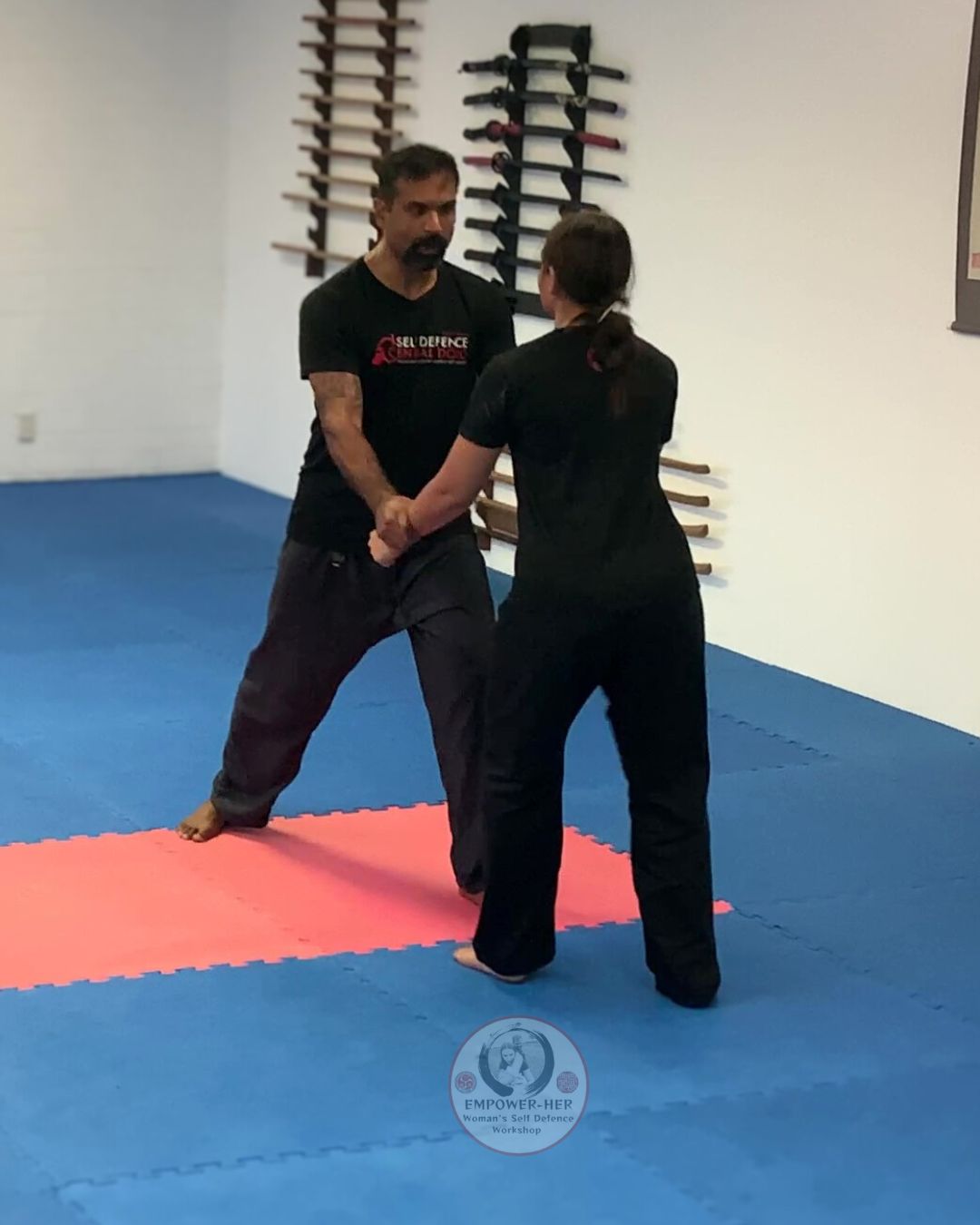
The first session starts with hand escapes — someone holding your wrist or arm so you can practise breaking the hold. The contact is controlled. The pace is slow.
Most students have never been physically grabbed by a stranger before, even in a training context.
For some it's fine from the first technique. For others it's the moment they realise this is real rather than theoretical.
The course is structured around that. Hand escapes are first deliberately. By session two, the thing that was unfamiliar in session one is starting to feel like training.
If you reach session one and decide it's not for you, full refund.
What past students have said
"I did this course with my teenage daughters last year. It was exceptional, great teachers, great course structure, we all learnt so much!"
Stephanie. FB.
"Brilliant! Well worth the money. I felt very comfortable in this dojo. The classes are small and personal. Andre and his daughter B’Elanna were patient and flexible. They were able to adjust the lessons to my personal needs and physical restrictions."
Kristina. June 2024.
"Am completing the Women's Self Defence course. I love it! Both instructors are very well informed and excellent teachers. It's a fun and engaging 6 week course, with lots of very useful skills that anyone can complete. Such a great learning opportunity and a welcoming environment. Highly recommend!!"
H. Knot, February 2024
If you have specific concerns
If you have anything you're unsure about, raise it in the DM rather than treating it as a reason not to enrol.
Things that come up:
— Past experiences they'd prefer not to discuss in a training environment
— Physical limitations, injuries, or chronic conditions
— Concerns about training in a dojo with men present at other times
— Scheduling that doesn't quite fit
— Anything else
Most things can be accommodated within reason. It's easier to talk through specifics before you commit than to discover a problem in session one.
Your teachers.
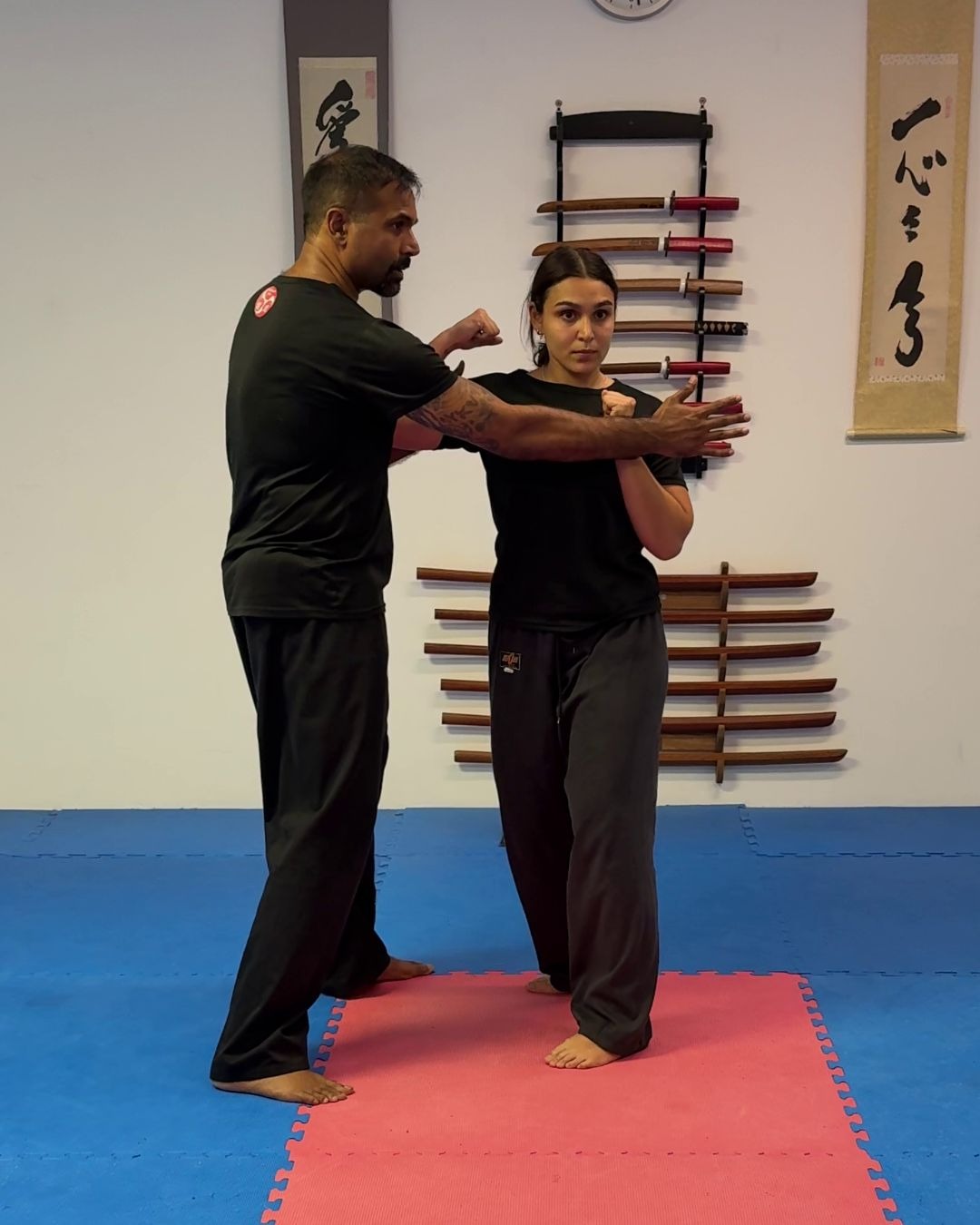
The course is run by B'Elanna Diaz, who teaches alongside Andre Diaz, the dojo's owner and principal instructor.
B'Elanna Diaz trains at Self Defence Central Dojo, specialising in Tsutsumi Hozan Ryu Jujutsu within the Jan de Jong lineage. She leads the Empower-Her course and also teaches in the dojo's Young Samurai children's program — meaning she works regularly with beginners of all ages, not just experienced students.
Andre Diaz owns and runs Self Defence Central Dojo. He holds the rank of Sandan (3rd Dan) in Tsutsumi Hozan Ryu Jujutsu and has been training continuously in the de Jong lineage since 1985 — nearly forty years. He teaches across the dojo's full programme — children, adults, and the Empower-Her women's course.
B'Elanna is Andre's daughter and has trained in the dojo since childhood.
The instructors who teach Empower-Her teach the dojo's regular jujutsu classes too. They train every week themselves. They're not weekend specialists.
On training with male instructors and partners
One of the most common questions women ask before enrolling is what it's like to train in a dojo where male instructors are present, and where male training partners are part of the later sessions.
Andre co-teaches every session of Empower-Her alongside B'Elanna, from Week 1. He doesn't disappear and reappear in later weeks — he's there throughout.
We asked Alycia, who completed the course twice, to talk about what that's actually like.
Two specific things are worth being clear about, because they're part of the course's design:
Andre's role. B'Elanna leads the instruction. Andre's role includes being the training partner for demonstrations — when B'Elanna shows a defence technique, she demonstrates it on him. He's a fixed presence rather than an unpredictable one.
Other male students in later sessions. As the course progresses, other male students from the dojo's regular jujutsu programme may volunteer to come in to help test the effectiveness of what you've learned. These are people you haven't been training with — which is exactly the point. Practising disengagement against someone who's larger, stronger, and not telegraphing what's coming is what tells you whether the techniques actually work. The controlled environment of the dojo is where it's safe to find out.
Alycia's full interview on youtube. If you'd like to hear her talk through the whole course experience. (7 mins)
If you have specific concerns — past experiences, particular discomfort, anything else — raise it in the DM. It can be accommodated.
If session 1 or 2 isn't right for you
Session 1 starts gentle. Hand escapes. Slow pace. Controlled contact. Most students find it easier than they expected.
The course gets more demanding from session 2 onward. Counters. Striking. Working with larger, stronger training partners as the weeks progress.
If by the end of session 2 the course isn't for you — for any reason — full refund.
The course works because the students who are there want to be there. The two-session refund means you can find out it's not for you without losing what you've paid.
Course details
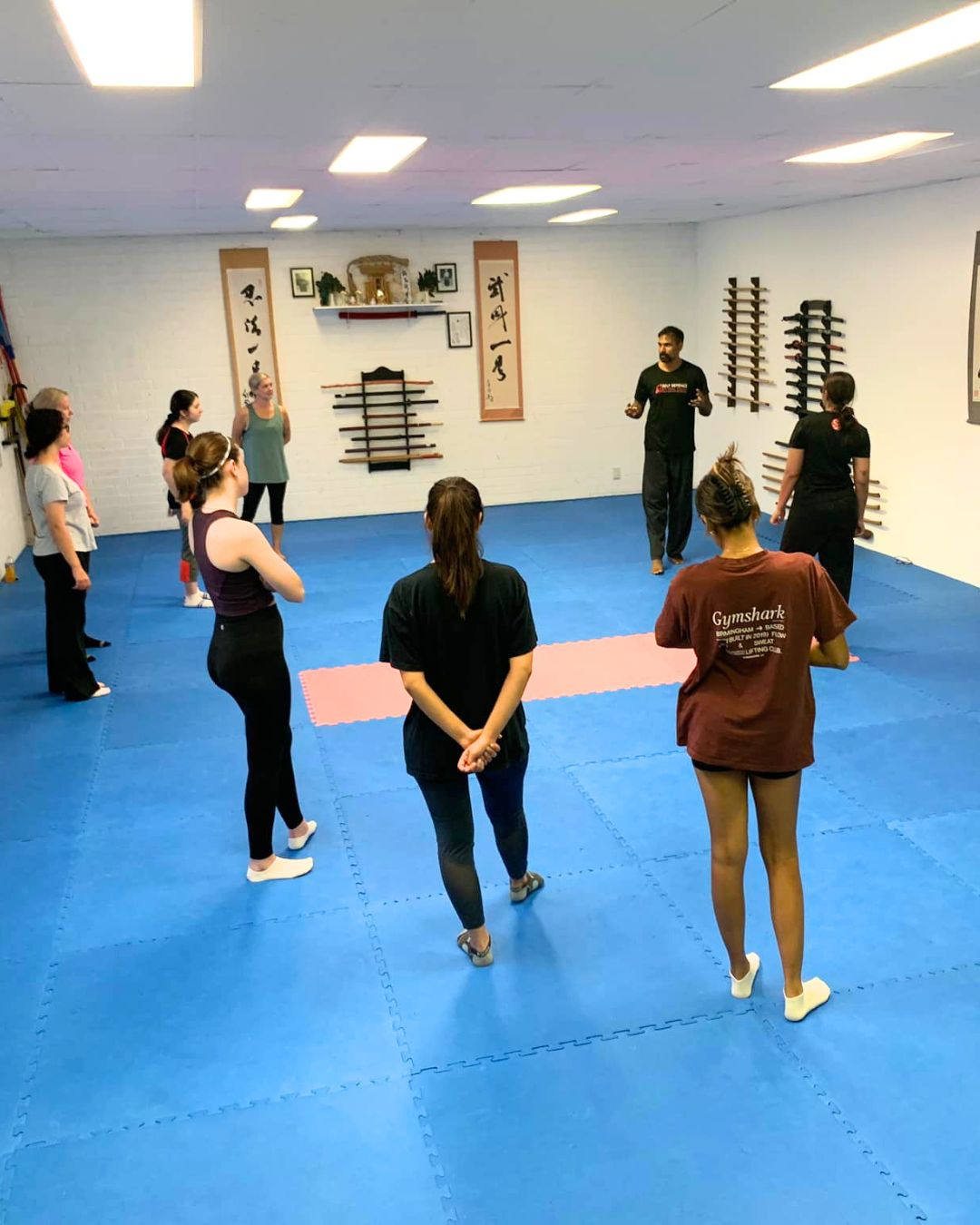
The
Duration: 6 weeks
Sessions: Monday 7:00pm – 8:00pm
Start date: Monday 22 June 2026
Location: Self Defence Central Dojo, 7a / 44 Hutton Street, Osborne Park
Parking: Free, directly outside
What to bring: Water bottle. Towel. Change facilities are available but it's best to come prepared.
Experience required: None.
Fitness required: None.
Group size: Limited to 12 places.
If you miss a session: Every class includes some revision of material from previous weeks — no one absorbs everything in one pass, so repetition is built into how the course is taught.
Price
$180 for the six-week course.
That's $30 per session if you only attend the Monday Empower-Her classes. But during the six weeks, you also have access to all of the dojo's regular Jujutsu classes at no extra cost:
— Mon,Tues,Wed 6pm
— Wednesday 5pm — women's only (the best class to revisit your Monday Empower-Her material, with other women who train regularly at the dojo)
— Saturday 9am
That's up to six classes a week — 36 sessions over the six weeks if you attended everything available. At $180 for the course, that works out to $5 a session if you used the full schedule.
Most students attend at least the Wednesday 5pm women's-only class alongside the Monday Empower-Her sessions, which works out to $15 a session.
More attendance means more repetition of the techniques you're drilling on Monday — and exposure to the broader jujutsu material that Empower-Her is drawn from. Students who use the full schedule finish the six weeks with substantially more capability than students who attend Monday only. That's not a promise about how you'll feel; it's a description of what you'll have practised.
Ready to confirm
Reply in the conversation and we'll lock in your spot for the next intake.
If the timing doesn't quite work, just mention it — we run the course four times a year, and the next intake won't be far away.
Once your place is confirmed, we'll send a separate page with everything you need before your first session — payment details, parking, what to expect when you arrive.
Any questions before then — same place. Just ask.
Tap the icon to continue the conversation
SMS, DM (Insta, FB, WhatsApp) email..
Self Defence Central Dojo
© Copyright 2026. All rights reserved