Where Jujutsu starts
First Principles - Jujutsu
Who this is-and isn't-for.
It's for you if:
— You want to start something real, not sample it
— You're ready to wear a gi from the first session
— You want to understand why a technique works, not just copy its shape
— You'd rather be in a small group with real instruction than a packed class where you figure it out yourself
— You've been curious about a traditional martial art and want a structured way in
— You've trained in another art and want to understand what is underneath it
It's not for you if you're looking for:
— A taster before deciding whether jujutsu is worth your time
— Fitness with a martial arts theme
— To be eased in gradually before anything real is asked of you
— A course where the uniform comes later, once you've decided you like it
A walk-in trial is available any time if that's what you're looking for. First Principles is something different.
Four weeks.
Structured.
Skills built session by session.
A course. Not a trial
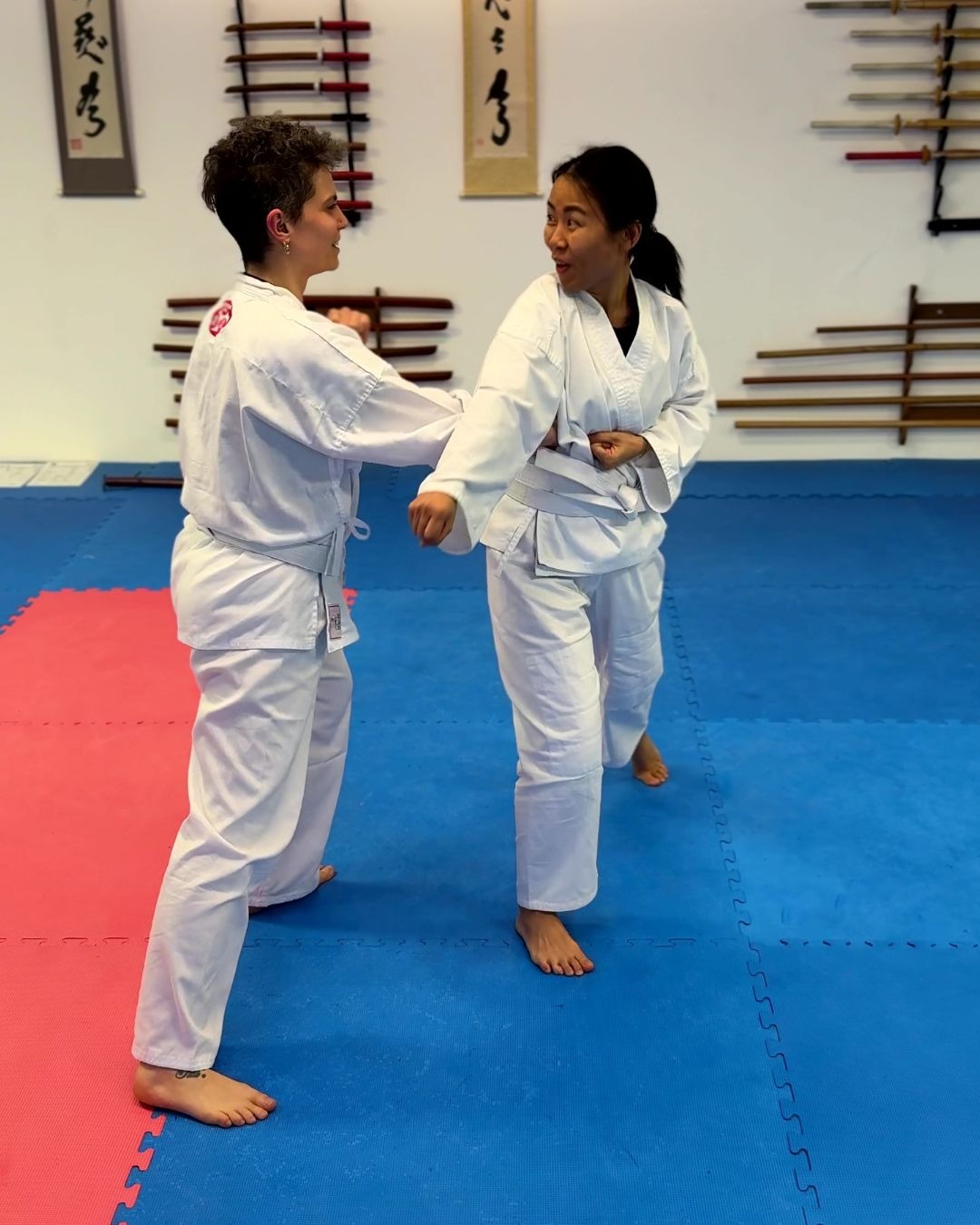
There's a difference between trying something and starting it.
A trial class lets you sample — you see the room, you meet the instructor, you get a feel. That's real and it's available here any time. But a trial doesn't teach you jujutsu. It shows you jujutsu from the outside.
First Principles is structured from session one as the beginning of the art — not an introduction to whether you might want to begin. You'll wear a gi from the first lesson. A sequenced four weeks where each lesson earns the next. By the final session you'll have two techniques, five attacks, and the principles connecting them. More importantly, you'll understand why they connect.
The course fee includes your gi. You'll wear it from session one — and leave lesson 4 with something on it that wasn't there when you arrived.
Four lessons. One class a week. Twelve students maximum.
How the four weeks is structured
Lesson 1 — Position and movement
Every technique begins with position. You'll learn kamae — ready posture — and two fundamental movements: irimi (entering) and irimi senkai (entering with rotation). From the first session you'll train with a partner, learning how to attack safely, receive safely, and perform your first jujutsu technique against a genuine attack.
Lesson 2 — Balance Before Technique
Technique doesn't create success — good positioning and unbalancing do. This lesson explores how balance is taken, how resistance reveals mistakes, and why effective technique feels effortless when the conditions are right. Your first joint lock is introduced here, along with the partner communication required to train safely.
Lesson 3 — Adaptability under pressure
What happens when you're late? This lesson introduces nagashi (flowing) — the ability to flow with an attack rather than meet it head-on. You'll discover that the same technique can emerge from many different attacks when the underlying principles are understood.
Lesson 4 — Reading, responding, integration
The final lesson brings everything together. Strikes and grabs. Patience, recognition, response — according to what is actually happening rather than what you expect. Reflex training: an attack you don't know is coming. Taisabaki first. Then whatever the position makes available. That's jujutsu.
The course details
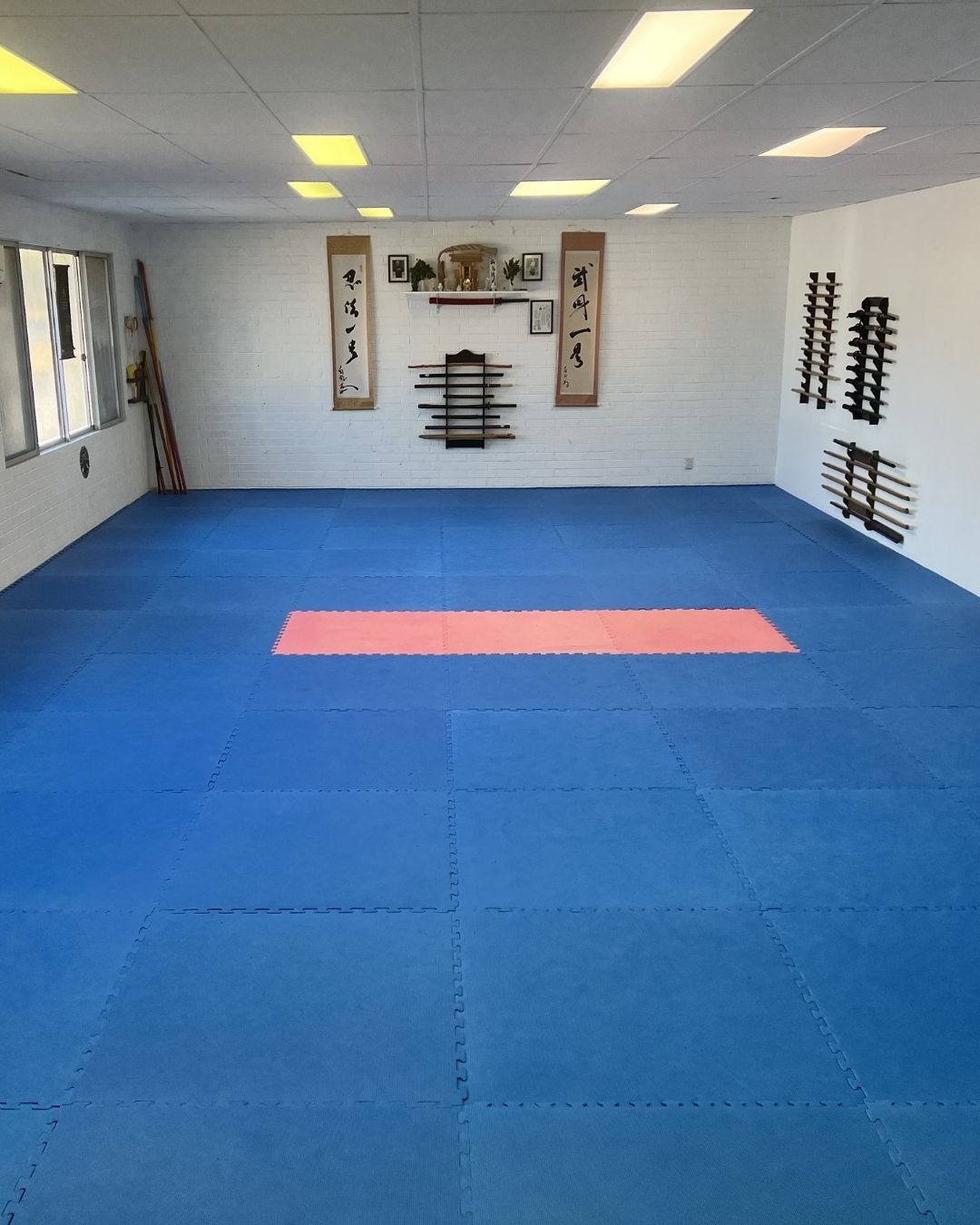
Duration: 4 weeks, one session per week
Unifform included..
Twelve students maximum.
Where: Unit 7a, 44 Hutton Street (above Primefit Gym)
— free parking directly outside
What to wear: Trackpants and a t-shirt. You will receive your uniform on the first session (so come at least 15mins early)
What to bring: A water bottle
Not sure which intake suits you? Just say when you message. And if you have to miss a session, we'll help you catch up so you don't fall behind.
Two ways to start
First Principles runs in two cycles — same course, same principles, same lineage. The difference is when it fits your week.
Monday evenings, 7pm.
Four consecutive Mondays, one hour each. The regular First Principles cycle. Rolls into the dojo's regular evening classes afterwards and Saturday mornings — whichever suits.
Weekday mornings, 9:30am.
Four weeks, one morning a week — Tuesday or Thursday. For anyone whose weekday mornings are open and who's been curious about Japanese jujutsu. Rolls into the dojo's Tuesday evening, Thursday evening, or Saturday morning classes afterwards.
Both cycles are taught by a senior instructor of the dojo, trained in the same Tsutsumi Hozan Ryu lineage.
Message Andre — he'll confirm dates and any details you'd like to know.
What this course is not
Not a grading preparation course.
The first adult grade is 4–6 months of twice-weekly training. First Principles is where that journey starts — not a shortcut through it.
Not a sampler.
The art has throwing, ground work, weapons, and decades of depth. None of that is in these four weeks. What's here is the reason all of it works.
Not a trial with structure around it.
Walk-in trials are available year-round. They're a different thing and they serve a different purpose. If you enrol in First Principles, you've decided to start — not to decide whether to start.
Worth a quick message?
Have a question? Ask anything. Andre replies personally — what it's like in the room, whether your situation works, anything at all. Tap the button and it opens Messenger with a message already written — just hit send, or change it to whatever you actually want to ask.
No commitment, no booking.
What the first session is like
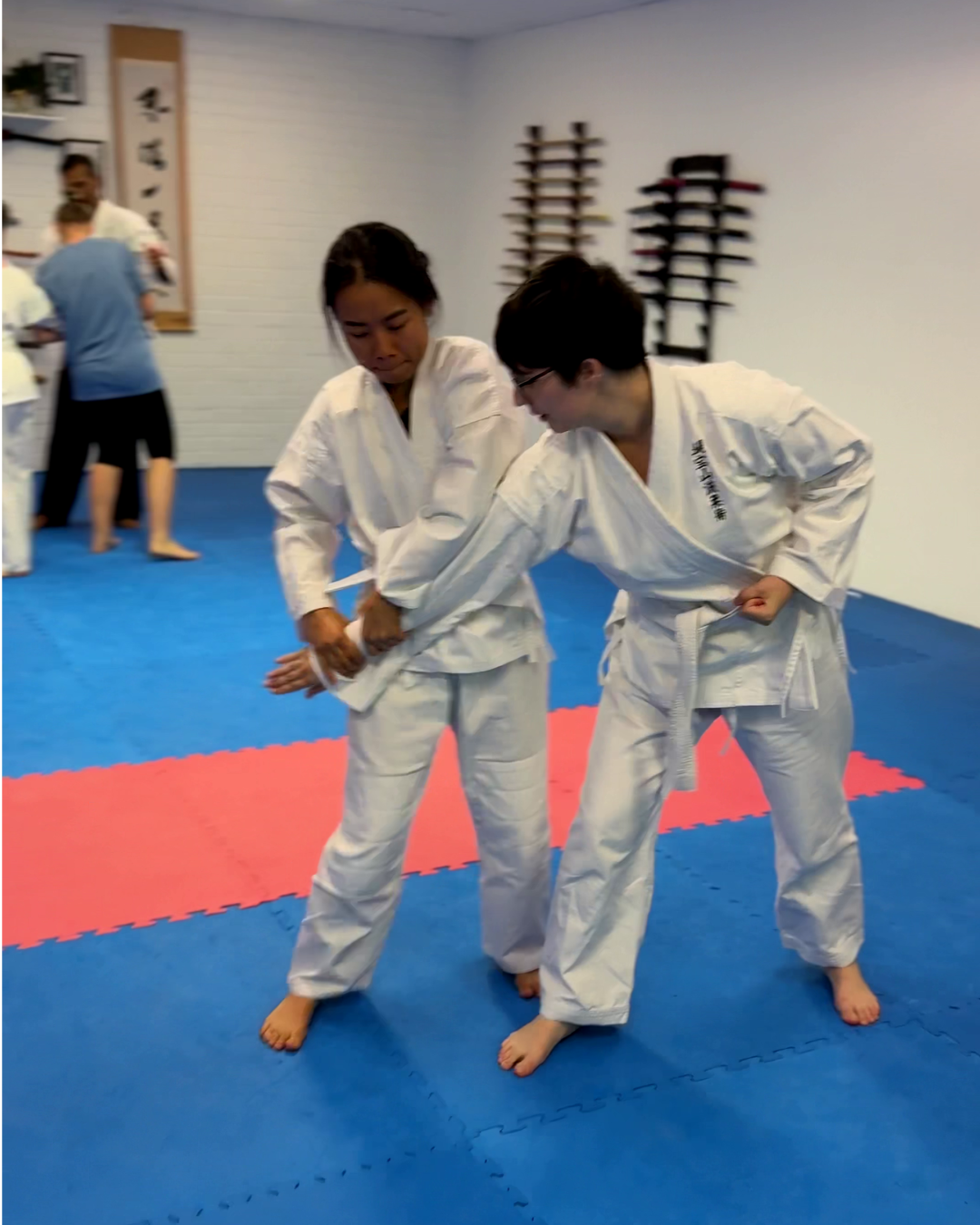
You'll arrive, get changed, and meet the other students in the group.
Andre will explain what the four weeks covers and what's expected of you — briefly, without over-explaining.
Then you move.
Kamae first — how to stand.
Then irimi, how to enter.
Then a middle punch, how to deliver one safely and how to receive one.
By the end of the first hour you'll have done your first jujutsu technique against a genuine attack, and taken your first sideways breakfall.
You'll leave having done something, not just watched something.
Who teaches it
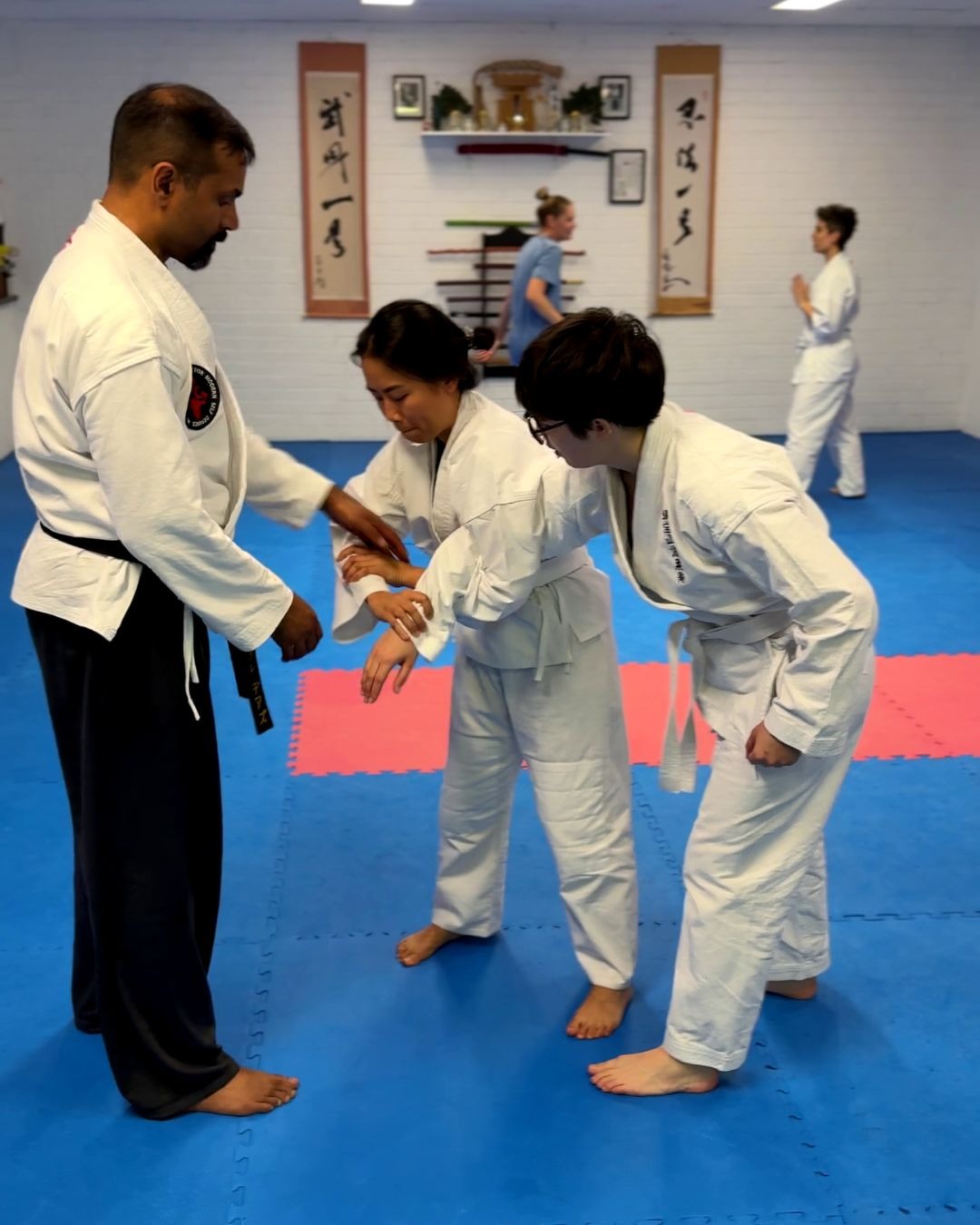
First Principles is taught by senior instructors of the dojo — the same instructors who teach the dojo's regular jujutsu classes, and occasionally guest instructors from related lineage dojos. Every one of them holds rank in the tradition and trains weekly themselves.
Every cycle of First Principles is taught by one instructor from start to finish. Not delegated to a senior student, not shared across instructors mid-course. The same person teaches all four lessons — because the rapport built in lesson one is what makes lesson four's reflex training land the way it should.
Andre Diaz, as pictured here, is the dojo's owner and principal instructor.
The instructor who begins your course teaches all four sessions of it. You'll know who they are before your first lesson.
What happens after the course?
The course ends with a clear picture of what comes next — regular classes, the grading pathway, and a continuation offer if you want to keep going. There's no obligation. You'll know what feels right once you've done it.
The next step
If this feels like the right kind of start, the simplest next step is a message.
You don't need to book or commit — just ask whatever you need to decide. Scheduling, prior experience from another art, a physical limitation, anything specific to your situation — that's exactly the kind of thing worth a message rather than treating as a reason not to come.
Under 18? You're welcome in the course, you'll just need a parent's ok first. Here is a page to share with them:
Tap below — Messenger opens with a message ready to go. Andre will reply.
It's a conversation, not a sign-up.
Prefer something else?
SELF DEFENCE CENTRAL DOJO
Unit 7a, 44 Hutton Street, Osborne Park, Perth, WA 6017
Andre: 0431 011 828
© Copyright 2026.All rights reserved.