WHAT IS JAPANESE JUJUTSU
And what you will actually be doing at Self Defence Central Dojo.
What the art is.
Jujutsu is the parent system. Judo, Brazilian jiu-jitsu, and aikido all developed from jujutsu traditions by extracting one aspect of a complete system and building a discipline around it. Judo took the throwing. BJJ took the ground work. Aikido took the joint lock and movement principles.
Jujutsu didn't narrow. It kept the whole system.
What's taught at Self Defence Central Dojo is Goshin Jujutsu — modern self-defence-oriented jujutsu developed and refined by Jan de Jong over more than half a century of teaching in Perth. It draws on three sources: Tsutsumi Hozan Ryu jujutsu as the foundation, Yoseikan Budo for the body movement and unbalancing structure, and pencak silat for specific stances and movement principles.
This is not a preserved feudal-era system. It's a living curriculum — coherent, tested, and refined across generations of actual teaching within one lineage.
If you've trained in BJJ, judo, or aikido you'll recognise elements immediately. The difference is that this art retains the connections between them — the principles that link a joint lock to a throw, a throw to a ground transition, a strike to a clinch. That integration is what makes the practice interesting across years.
Sport martial arts are optimised for one opponent, no weapons, agreed rules. BJJ, judo, and Olympic karate are genuine disciplines within those constraints.
The de Jong system wasn't designed for that context. The curriculum addresses empty-hand attacks from the first adult grading and introduces weapon awareness — stick and knife defences — from the second grade onwards. That sequencing reflects a curriculum designed around realistic scenarios rather than a competitive ruleset.
How it works
Every technique in this system moves through the same three phases.
First — body movement. Taisabaki. You move to create position — off the line of attack, into a structure that gives your technique mechanical advantage. Before anything else happens, the body has to be in the right place.
Second — unbalancing. Kuzushi. You break the opponent's structural stability. A technique applied to a balanced, stable opponent requires strength. The same technique applied to an unbalanced opponent requires almost none. Kuzushi is the bridge between body movement and technique — it's what makes jujutsu a leverage-based art rather than a strength-based one.
Third — technique. Waza. The joint lock, the throw, the strike. Applied to an opponent whose structure has already been compromised by the first two phases.
This three-phase logic runs through every defence in the curriculum from the first session to the highest grades. It's the reason a 60-kilogram practitioner can apply an effective technique to someone significantly larger. The strength isn't in the technique — it's in the position and timing that precede it.
Understanding that logic is the work of years. Encountering it is the work of the first class.
Worth a quick DM?
The easiest way is Messenger — it opens with a message ready to send.
What you'll actually do
The curriculum at Self Defence Central Dojo covers six interconnected areas.
They are introduced together from the first session — not sequentially, not in isolated modules. The art is systemic from day one.
Adults and teenagers 16 and over enter directly at the first adult grade — 9th kyu. There is no beginner's introductory programme separate from the main curriculum.
Ukemi. Falling safely
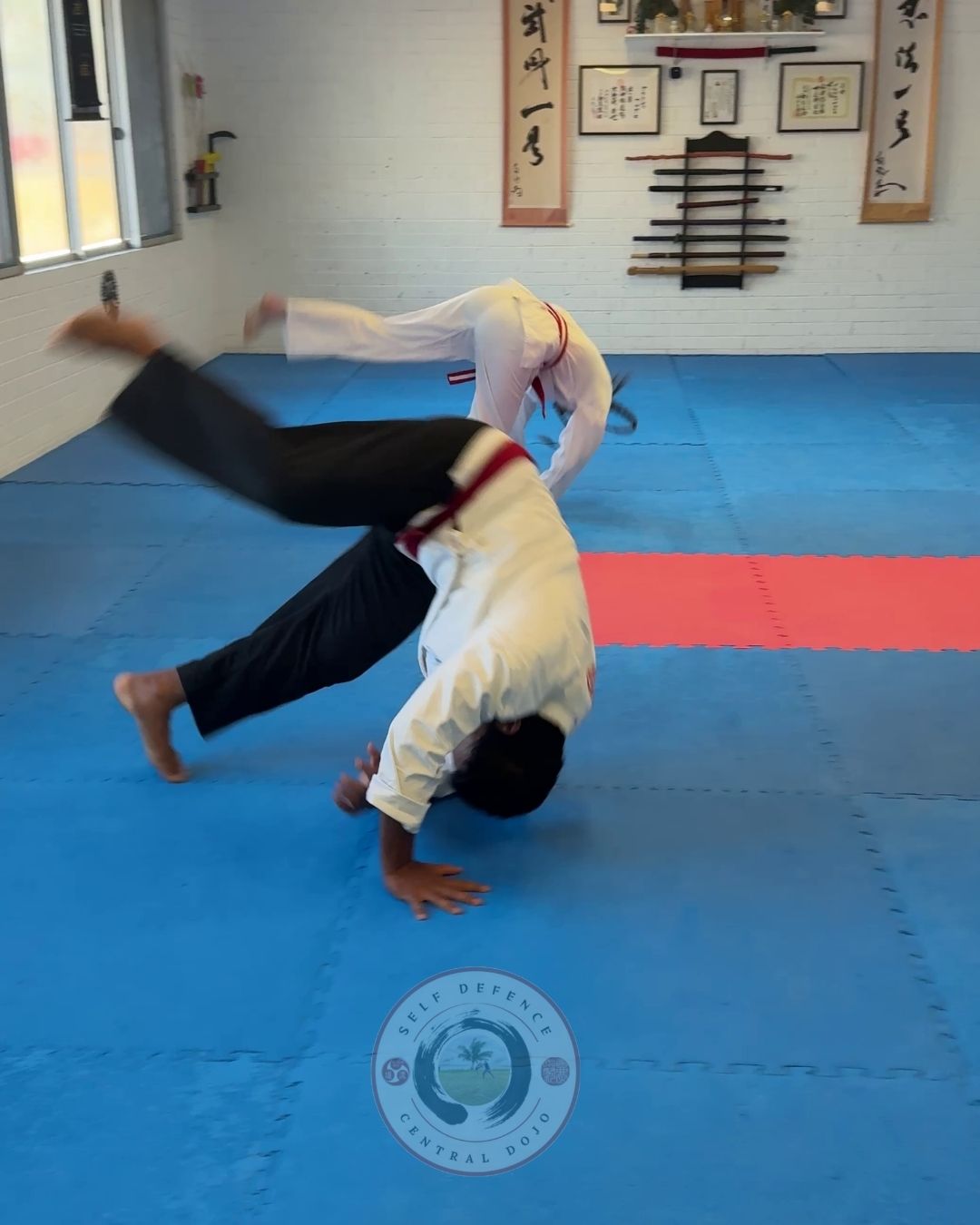
One of the first things every student learns is how to fall safely and avoid injury. .
Six types of breakfall — forward roll, backward roll, sideways roll, forward flat, backward flat, sideways flat. Falling safely is a skill taught before you're thrown, not discovered when you are.
Atemi — Applied contact
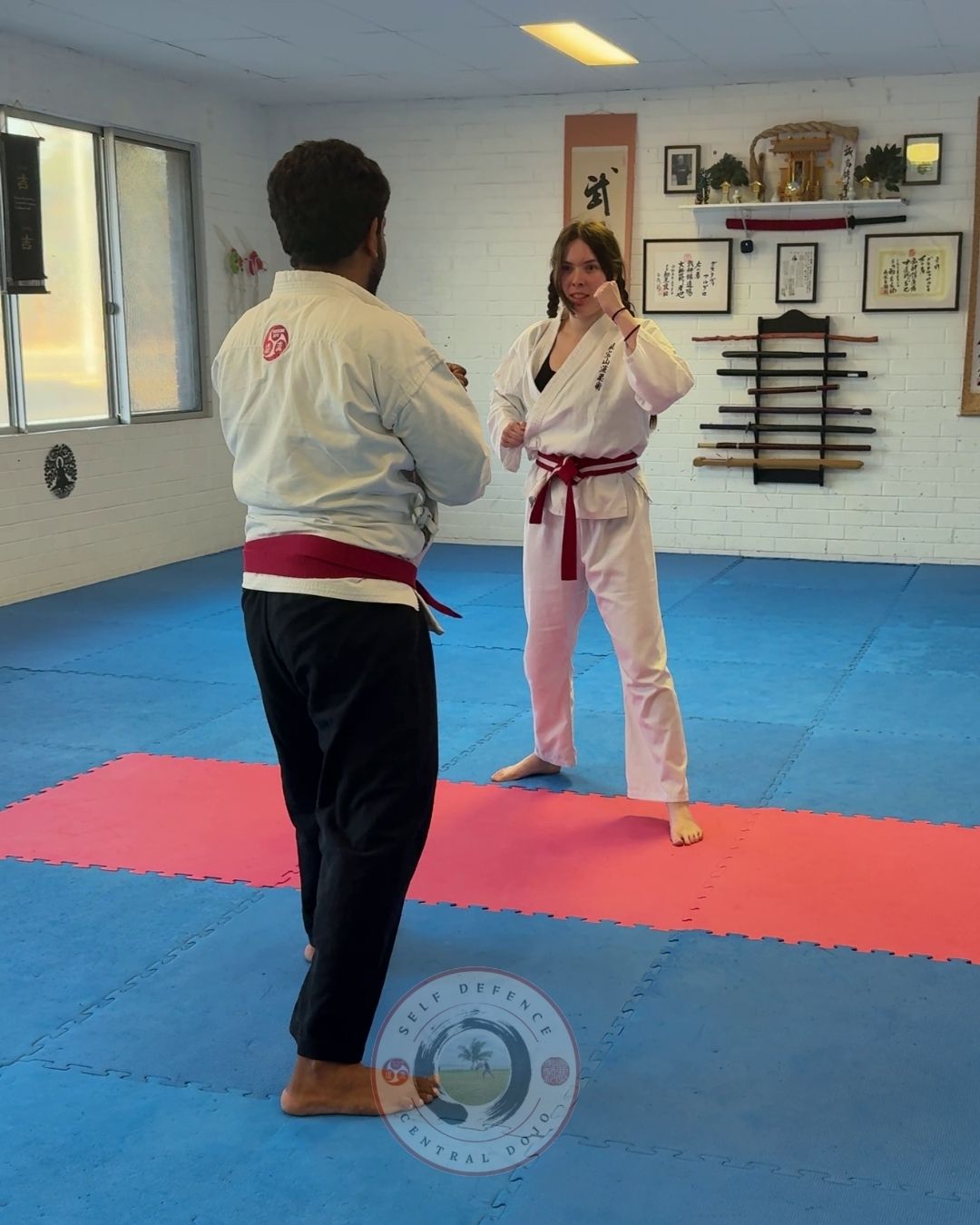
In jujutsu, atemi isn't about hitting for damage.
Atemi creates the opening the technique needs — by changing attention, posture, or direction — so the technique works without requiring strength. A strike to the face changes where the opponent is looking. A strike to the ribs changes their posture. Either creates the fraction of a second of structural disruption that makes the following technique possible.
At the end of a sequence, atemi serves a different function — removing the last piece of resistance once control is nearly established. Not damage. Completion.
This is why atemi is integrated throughout the curriculum rather than treated as a separate striking system. It is not karate. It is not Muay Thai. It is a precision tool in service of the art's larger logic.
Taisabaki. Body movement
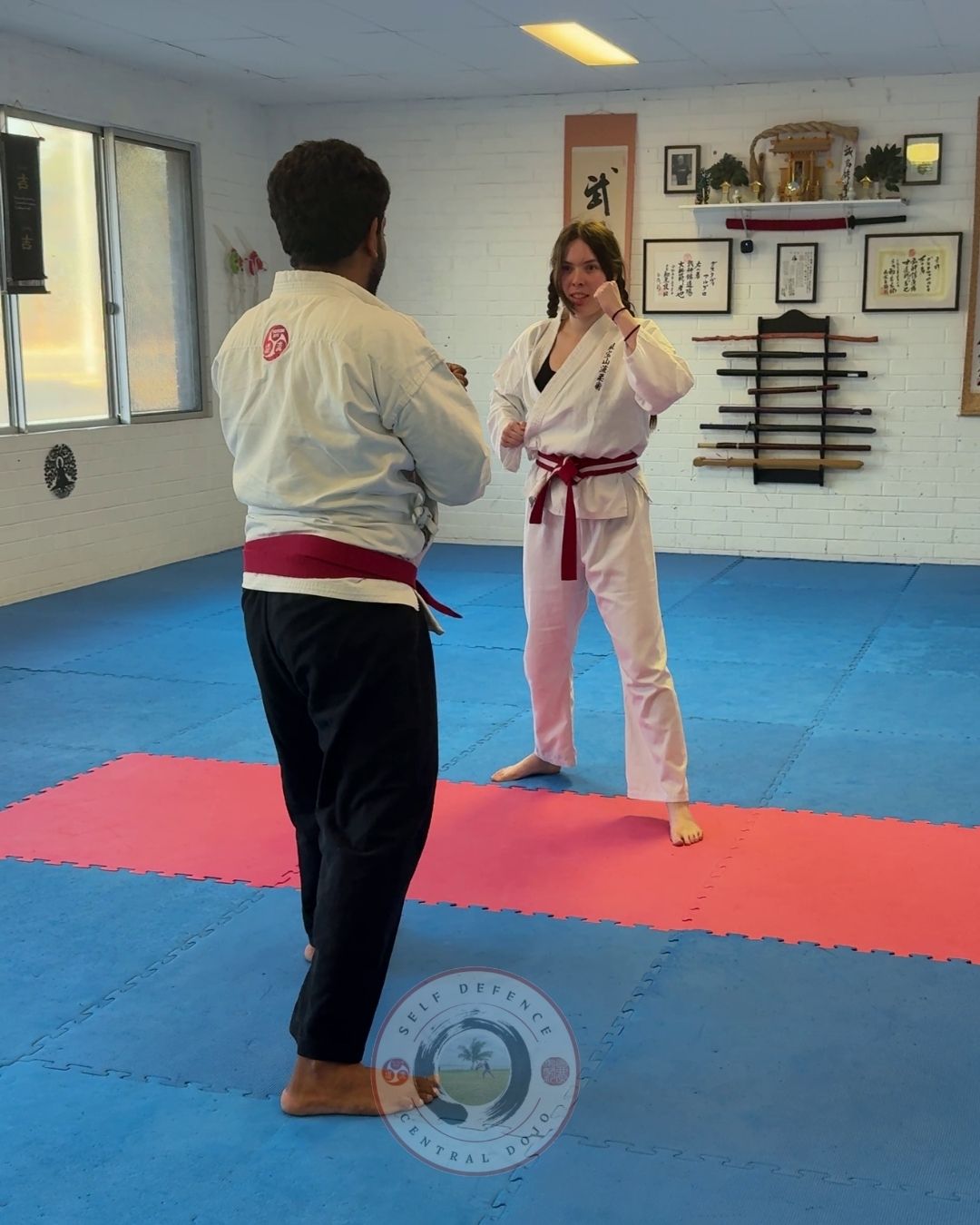
The foundation of everything. Flowing, entering, entering rotation, sliding, dodging — each a precise way of moving the body relative to an incoming attack.
Taisabaki is trained before and alongside every other element of the curriculum. Poor body position makes every technique harder. Correct body position makes most techniques possible without strength. The body movement patterns introduced at 9th kyu are the same ones present at black belt level — the sophistication develops, the principles don't change.
Kuzushi — Unbalancing
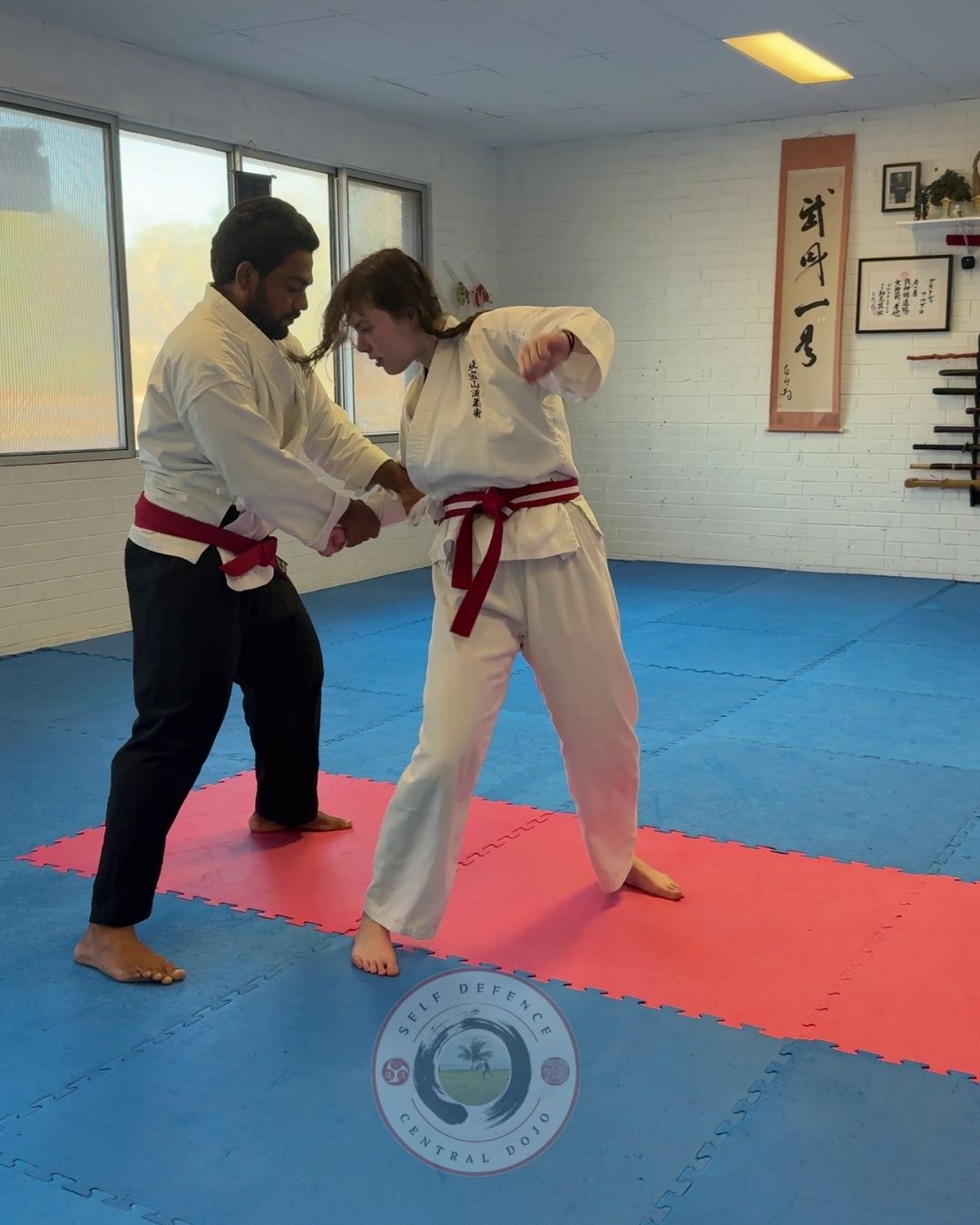
Taking a partner's structural stability before applying technique. From wrist grips, lapel grips, rear holds, pushing and pulling attacks. The basic patterns — normal, same side, reverse, rear — are introduced in the first sessions and developed across years of practice.
The difference between a technique that works and one that doesn't is almost always in the kuzushi preceding it. A joint lock applied without kuzushi requires force. The same lock applied after correct unbalancing requires almost none.
Kansetsu waza — joint locking
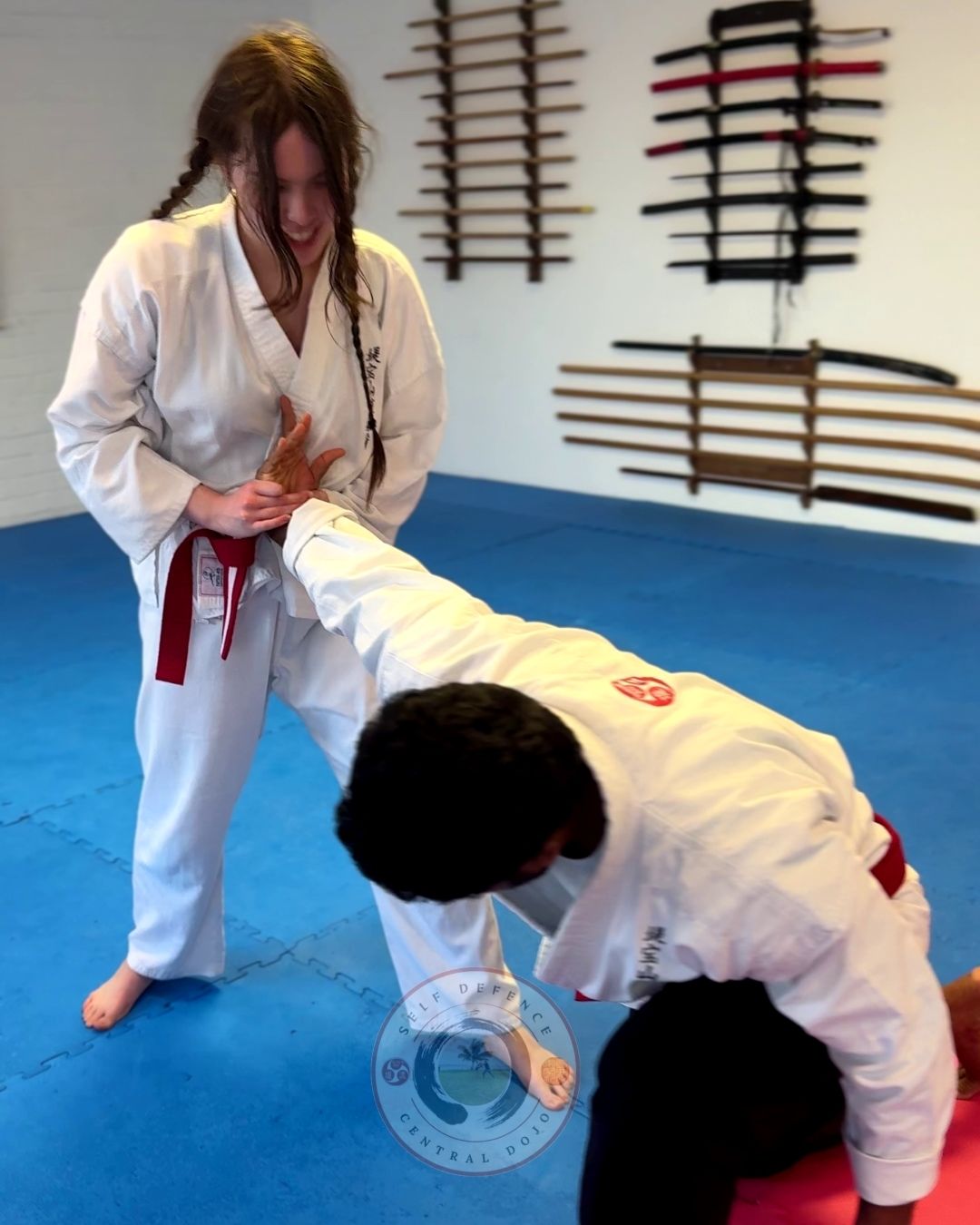
The art's signature category. Nine basic joint locks covering the wrist, elbow, and shoulder — introduced progressively across the first three adult grades. Applied standing, in transition, and on the ground.
The locks don't require strength. They require precise understanding of joint structure and leverage. That precision is what's being developed across the early grades — and what continues to develop across years of serious practice.
From the very first grading, joint locking is demonstrated against two attackers — not as free fighting, but as a structured test of applying technique while managing more than one person. That requirement is present from 9th kyu.
Nage waza — throwing
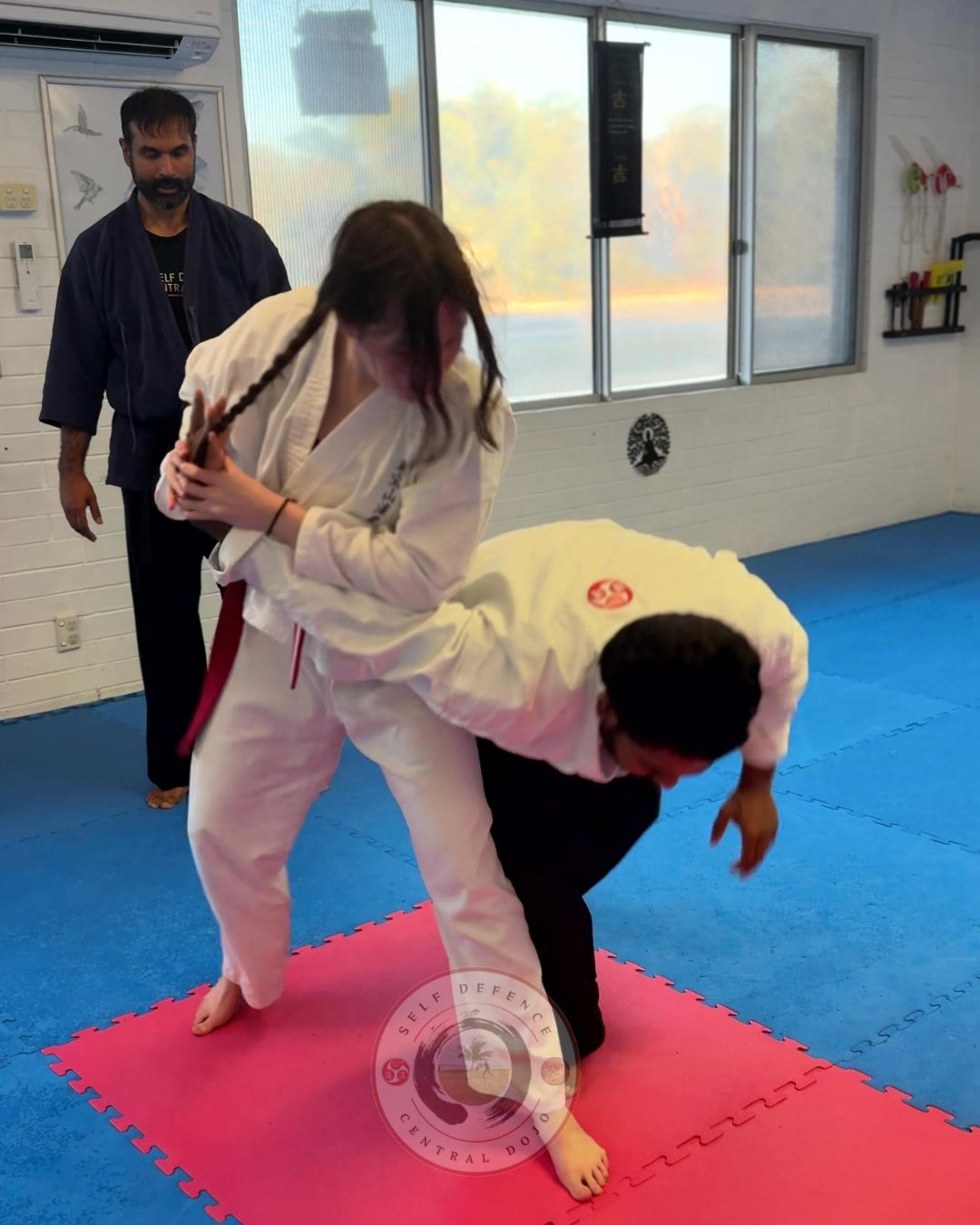
Hip throws, shoulder throws, foot sweeps and reaps. Throwing techniques are introduced at 7th kyu — the third adult grade — after the body movement and unbalancing foundations are established.
That sequencing is deliberate. A throw is the consequence of correct taisabaki and kuzushi, not a technique applied in isolation. Students who understand the three-phase logic find throws arrive naturally once they are introduced. Students who try to throw without that foundation find they don't work.
Shinken shobu no kata — Reflex
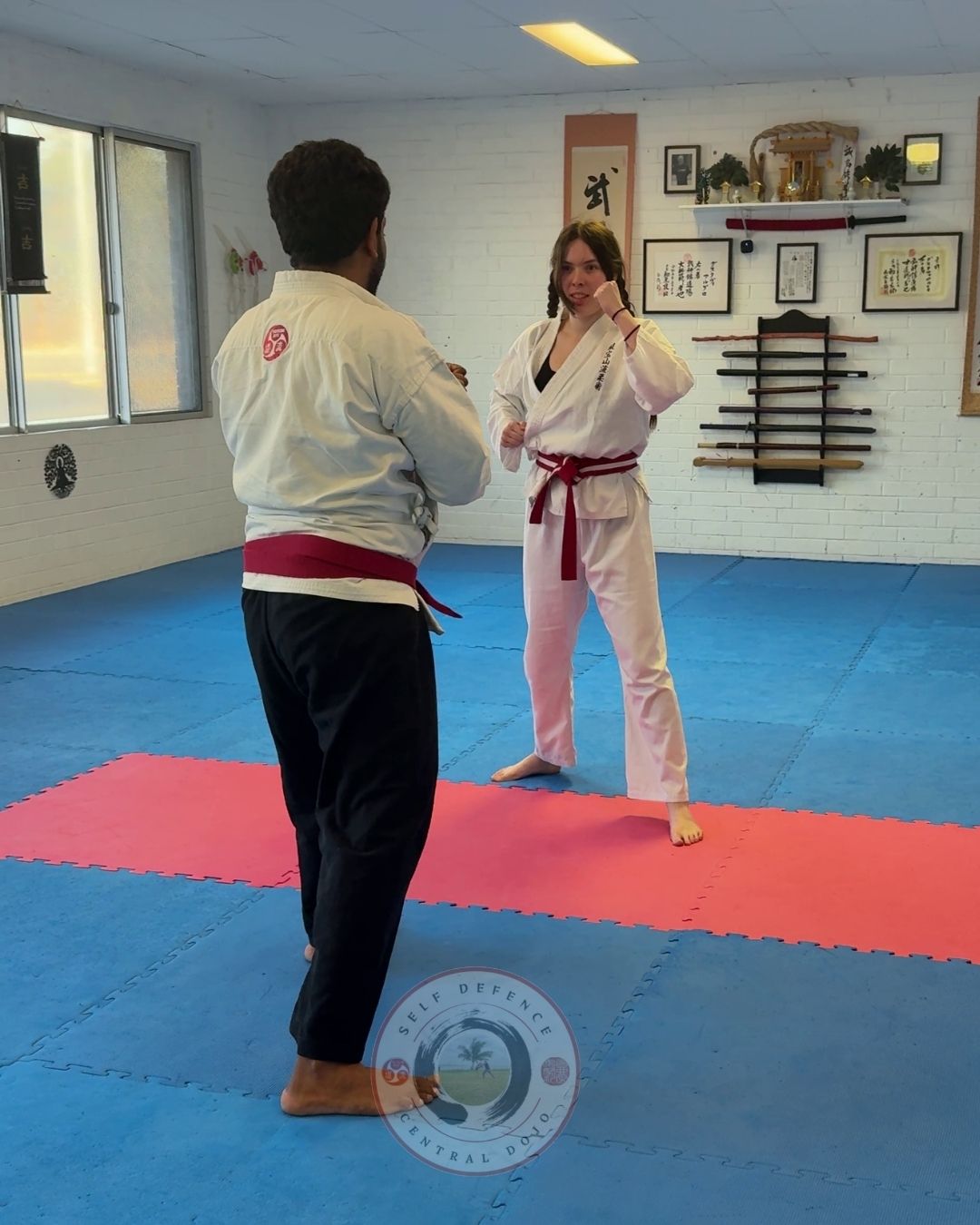
A unique feature of the de Jong system not found in other jujutsu schools. Structured free-response defence sequences against realistic attacks — grips, strangles, punches, kicks, ground scenarios. Present from the first adult grading.
Weapon awareness — stick and knife defences — is introduced from the second adult grade, once the foundational empty-hand responses are established.
The reflex section grows with each grade. Five attack scenarios at the first grading. Ten at the second. Fifteen at the third. Thirty by the fourth grade. The curriculum is designed to progressively expand what the student can respond to, not just what they can demonstrate in isolation.
Every defence can be required left or right, inside or outside. The grading tests genuine adaptability, not pattern memorisation.
Randori — multiple attackers
This form of practice, against multiple attackers is there for you to take the skills you learn in paired practice and apply them while moving, adjusting, and reading your partner — without needing intensity or sparring.
The depth
The curriculum runs from beginner kyu grades through to dan grades and beyond — including separate streams for weapons work in Kobudo (Weapons) and Kenjutsu ( Japanese sword).
The full grading structure is one of the most extensive in traditional martial arts.
Reaching black belt in this system takes a serious practitioner approximately a decade of consistent training. That's not a warning. It's a description of how deep the art actually is.
Students who grade through SDCD do so within the Tsutsumi Hozan Ryu International framework — their grades are recognised internationally across affiliated schools in Australia, Europe, and beyond.
Ready to find out if this is for you?
The curriculum described on this page runs through all four programmes at Self Defence Central Dojo.
The decision page for each programme tells you who it's for, what the first session is like, and how to start a conversation.
Take a look at the programme you're interest in:
Worth a conversation?
If this feels like the place, the simplest next step is a quick message.
You don’t need to book or commit — just ask whatever you need to decide.
The easiest way to reach us is Facebook
Prefer something else?
SELF DEFENCE CENTRAL DOJO
Unit 7a, 44 Hutton Street, Osborne Park, Perth, WA 6017
Andre: 0431 011 828
© Copyright 2026.All rights reserved.